
treks
Best Treks to Machu Picchu: Which Route Is Right for You?
Compare every trek to Machu Picchu: Inca Trail, Salkantay, Lares, Inca Jungle and combinations. Difficulty, altitude, permits, seasons and prices.
There are five main ways to hike to Machu Picchu, and they are very different experiences. Only the Inca Trail, in its classic or short version, actually arrives on foot through the Sun Gate. It is also the only route that needs a government permit. Salkantay, Lares and the Inca Jungle end in Aguas Calientes, from where you take the bus up to the citadel. Here is how they compare.
The treks compared
| Trek | Duration | Difficulty | Max altitude | Permit | Arrival | From |
|---|---|---|---|---|---|---|
| Classic Inca Trail | 4 days | Challenging | 4,215 m | Yes | Sun Gate | US$ 789 |
| Short Inca Trail | 2 days | Moderate | About 2,730 m | Yes | Sun Gate | US$ 559 |
| Salkantay Trek | 4–5 days | Challenging | 4,630 m | No | Aguas Calientes | US$ 489 |
| Lares Trek | 4 days | Moderate | About 4,400 m | No | Aguas Calientes | US$ 599 |
| Inca Jungle Trek | 4 days | Moderate | About 4,300 m (by bike) | No | Aguas Calientes | US$ 389 |
| Salkantay & Short Inca Trail | 5 days | Challenging | 4,630 m | Yes (Day 4) | Sun Gate | US$ 949 |
| Lares & Short Inca Trail | 5 days | Moderate | About 4,400 m | Yes (Day 4) | Sun Gate | US$ 849 |
The Classic Inca Trail (4 days)
The original Inca road to Machu Picchu: about 40 km of stone paths through cloud forest, with Inca sites such as Runkurakay, Sayacmarca, Phuyupatamarca and Wiñay Wayna that can only be reached on foot. Day 2 crosses Dead Woman’s Pass (4,215 m), the hardest climb of the trek, and Day 4 ends at the Sun Gate with the citadel below you. Permits are limited and personal, so book 6–8 months ahead for May to August. Best for travelers who want history and the classic arrival. Read our guide to Inca Trail permits.
The Short Inca Trail (2 days)
The last section of the Inca Trail in one day of hiking: from Km 104 past Chachabamba, up the Inca stairs to Wiñay Wayna and on to the Sun Gate, followed by a hotel night in Aguas Calientes and a full guided visit the next morning. It needs a permit too, but from a separate allocation that is easier to get. Best for families with children aged 10 or older, travelers short on time and anyone who wants the Sun Gate without camping.
The Salkantay Trek (4–5 days)
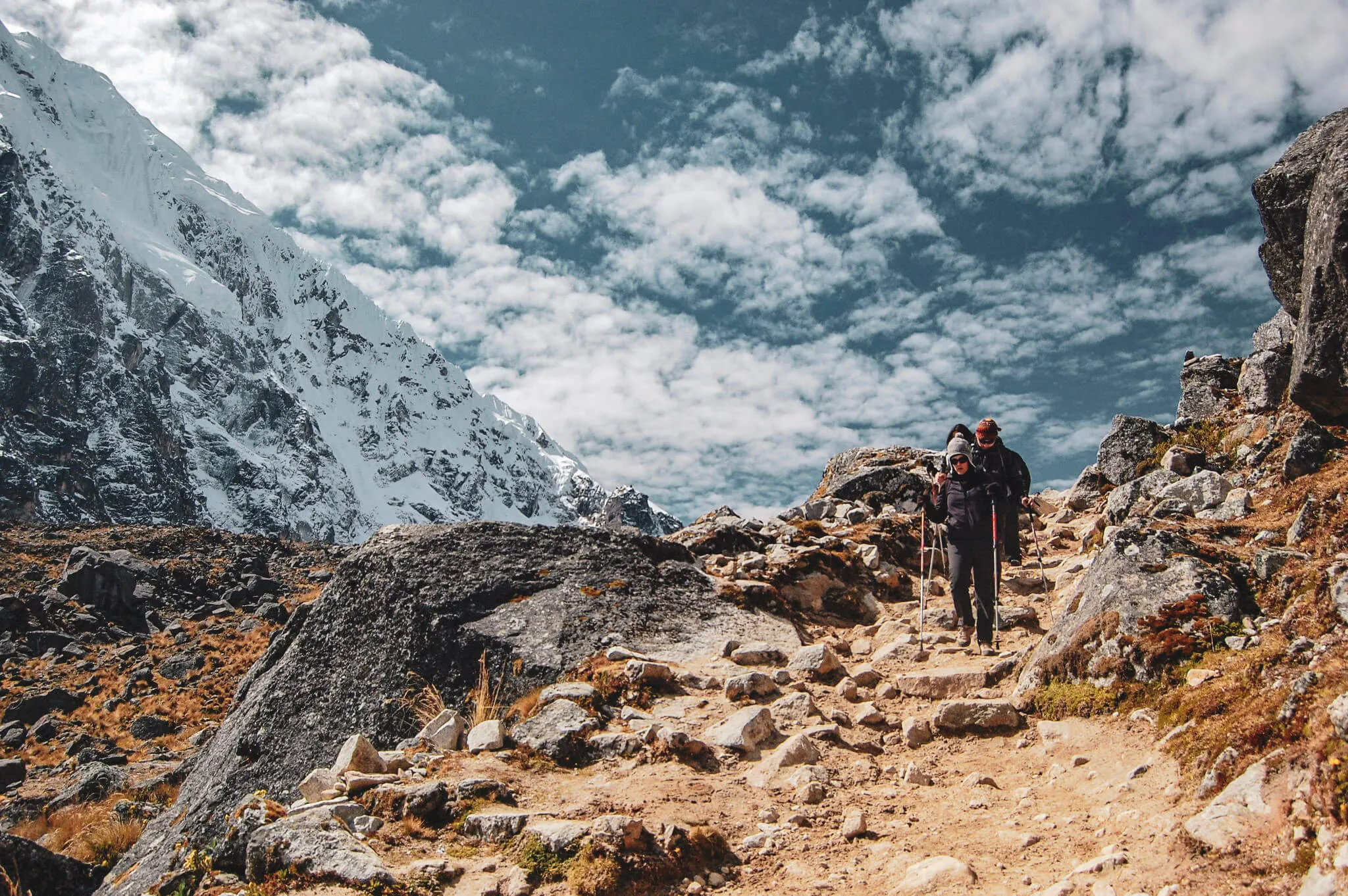
The most spectacular alternative: from Humantay Lake, a turquoise glacier lake, over the 4,630 m Salkantay Pass beneath the snow peak, then down into cloud forest and coffee farms, with a distant view of Machu Picchu from the Llactapata ruins. Days are long and the pass is high, so you need good fitness and at least two days in Cusco to acclimatize. No permit needed, so dates are flexible. Best for hikers who love big mountain scenery.
The Lares Trek (4 days)
The cultural trek: Quechua villages where families still weave, wear traditional dress and herd llamas and alpacas, hot springs on the first day and high lakes below the Ipsaycocha Pass. It is shorter and gentler than Salkantay and runs all year, including February. Best for travelers interested in living Andean culture, photographers and active families.
The Inca Jungle Trek (4 days)
The adventure route: a downhill bike ride from the Abra Málaga pass into the jungle, rafting on the Urubamba, a section of Inca trail through coffee and fruit farms, the Cocalmayo hot springs and a zipline before the walk to Aguas Calientes. It is more about activities than altitude, and it is the cheapest way to reach Machu Picchu on a multi-day trip. Best for younger travelers and groups of friends. Travel insurance that covers adventure sports is essential.
Combination treks
If the 4-day permits are sold out, or you want both mountains and the Sun Gate, combine Salkantay or Lares with the Short Inca Trail. You spend three days on the alternative route and finish with the last section of the Inca Trail into Machu Picchu. These need a Short Inca Trail permit and do not run in February.
Treks beyond Machu Picchu
Two more treks are among the best in Peru, but they do not end at Machu Picchu: Ausangate, a high circuit of glaciers and lagoons that finishes at Rainbow Mountain, and Choquequirao, a hike down and up the Apurímac canyon to a huge Inca city that you may share with only a few other visitors. Both can be combined with a Machu Picchu train tour afterwards.
Inca Trail vs. Salkantay
| Classic Inca Trail | Salkantay | |
|---|---|---|
| Highlights | Inca sites, cloud forest, Sun Gate arrival | Glaciers, Humantay Lake, coffee farms |
| Highest point | 4,215 m | 4,630 m |
| Permit | Yes, limited | No |
| February | Closed | Open |
| Crowds | Fixed daily limit | Varies, but more flexible camps |
| Best for | History lovers | Landscape lovers |
The Inca Trail is about archaeology: Inca sites you can only reach on foot, ending at the Sun Gate. The alternatives are about landscapes and living culture, with more flexible dates and no permit. If you want both, choose a combination with the Short Inca Trail.
Which trek suits you?
- History and the Sun Gate arrival: Classic Inca Trail, or the Short Inca Trail if you have less time.
- Big mountain scenery: Salkantay, with Humantay Lake and a 4,630 m pass.
- Living Andean culture: Lares, through weaving villages and hot springs.
- Adventure activities: Inca Jungle, with biking, rafting and zipline.
- No 4-day permits left: Salkantay or Lares combined with the Short Inca Trail.
- Traveling in February: Salkantay, Lares or Inca Jungle, because the Inca Trail is closed.
When to go
The dry season, from April to October, is the best time for every trek, with May and September offering the best balance of weather and crowds. From November to March, trails are muddy and the mountain views are often in cloud. The Inca Trail closes every February. See our month-by-month guide to the best time to visit Machu Picchu.
How to prepare
- Acclimatize: spend at least two days in Cusco or the Sacred Valley before any trek. Read our guide to Machu Picchu altitude.
- Train: walk for several hours with a daypack and climb stairs in the weeks before your trip.
- Pack well: broken-in hiking boots, layers for freezing nights, a rain jacket and a good sleeping bag (or rent one).
- Book early: Inca Trail permits first, then build the rest of your trip around them.
Tours to link
Plan this with a local team

Inca Trail · permit required
Classic Inca Trail
Hike the Classic Inca Trail to Machu Picchu with a local Cusco operator. Permit, Machu Picchu entry, porters, meals and an Expedition return train are included.
Andean trek
Salkantay Trek
Cross the 4,630 m Salkantay Pass, turquoise Humantay Lake and cloud forest to Machu Picchu. Camps, meals, train and Machu Picchu ticket included.

Andean trek
Lares Trek
Walk through weaving communities, high lakes and the Lares hot springs, then visit Machu Picchu. Meals, camping, train and ticket included.
Frequently asked questions
Quick answers
Which trek arrives at Machu Picchu on foot?
Only the Inca Trail (Classic, Short, or the combinations that end with it).
Do I need a permit for Salkantay or Lares?
No. Only the Inca Trail needs a government permit.
Which trek is the hardest?
Salkantay, because of its 4,630 m pass and long days. Lares is moderate, and the Inca Jungle is more about activities than altitude.
Which trek is best for beginners?
The Short Inca Trail: one day of walking, a hotel night and a full guided visit of Machu Picchu.
Where do we sleep?
In camps on the Inca Trail, basic camps or lodges on Salkantay, campsites on Lares and simple hostels on the Inca Jungle, usually with a final night in Aguas Calientes.
How fit do I need to be?
For the Classic Inca Trail or Salkantay, you should be able to hike 6–8 hours a day for several days. Train with long walks and stairs in the weeks before your trip.