
Huayna Picchu: The Steep Peak Behind Machu Picchu
Everything about the Huayna Picchu hike: how hard it is, how long it takes, how to get a ticket, and how it compares with Machu Picchu Mountain.
 By Edith Cajigas, Lead Guide, Machu Picchu
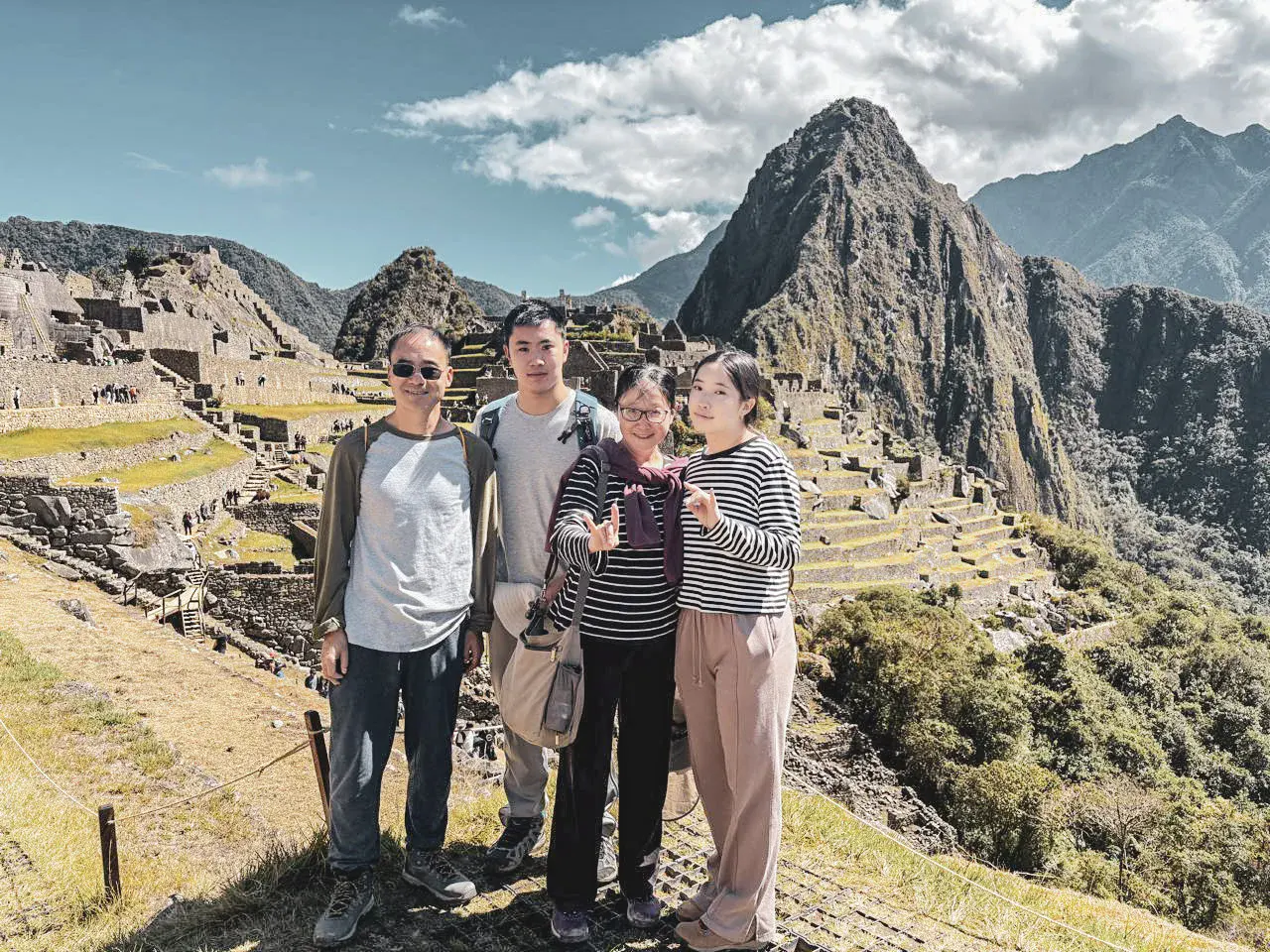
Huayna Picchu is the steep peak behind Machu Picchu, at 2,720 m. The climb takes about 2 hours up and down on narrow Inca stairs, and it gives the closest view of the citadel from above. It needs its own ticket: route 3A, which in practice is sold together with the Royalty route of the citadel (3B). Only 200 people a day can climb it, so it often sells out months ahead in high season. Entry times change on January 1, 2027: until then the slots are 7 am and 10 am; from 2027 you enter the citadel at 6:00 or 8:00 and must start the climb by 10:00.
Huayna Picchu at a glance
| Summit altitude | 2,720 m (8,920 ft) |
| Height gained | About 300 m above the citadel |
| Distance | About 2 km round trip |
| Time | 2–3 hours round trip |
| Ticket | Route 3A (Huayna Picchu) with route 3B (Royalty route) |
| Entry times | 7:00 am or 10:00 am in 2026; new schedule from 2027 (see below) |
| Daily limit | 200 people |
| Maximum visit time | 6 hours until December 31, 2026; 5 h 30 from January 1, 2027, including the citadel |
| Our recommendation | Ages 12+, good fitness, no fear of heights |
What does Huayna Picchu mean?
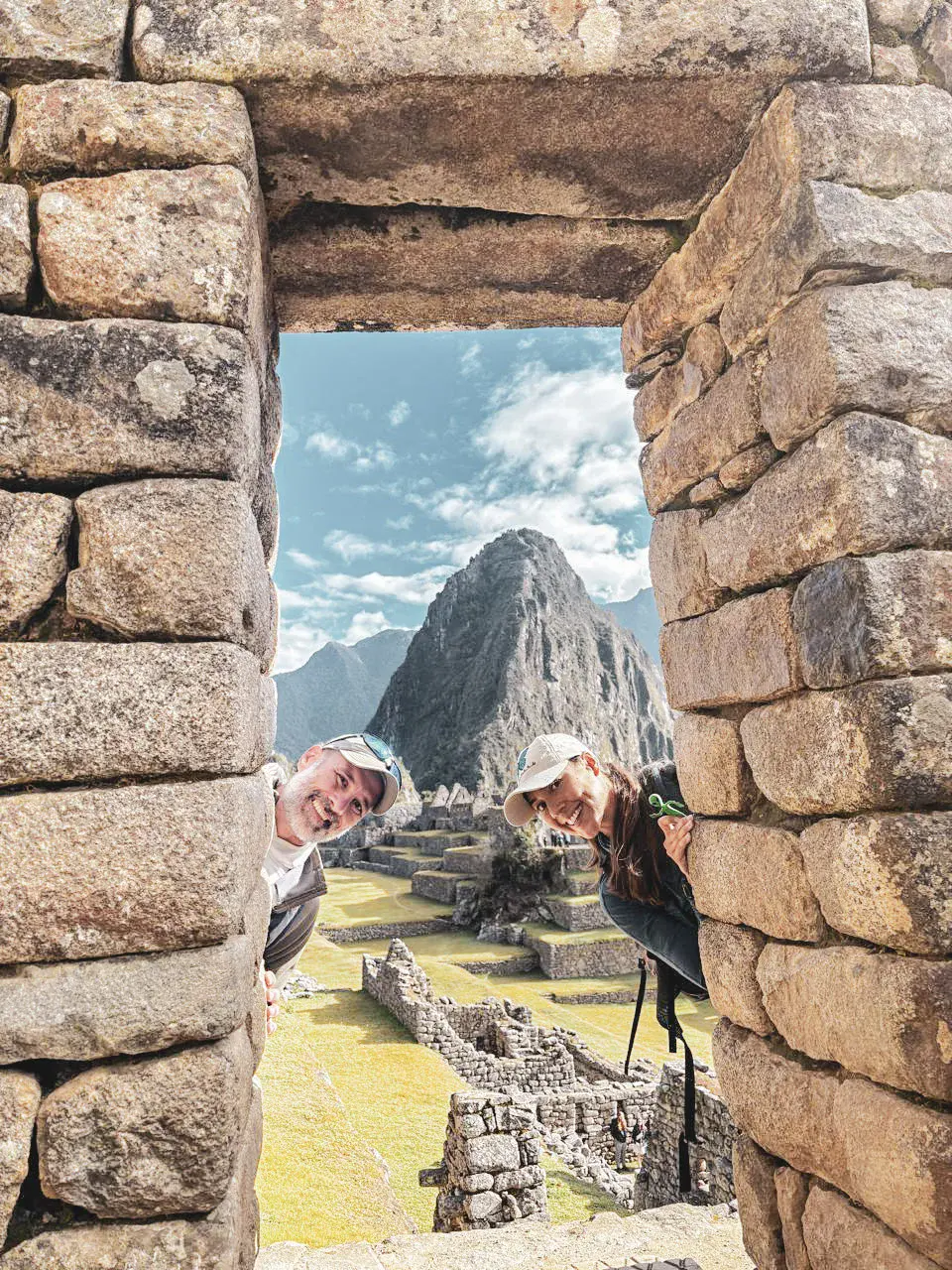
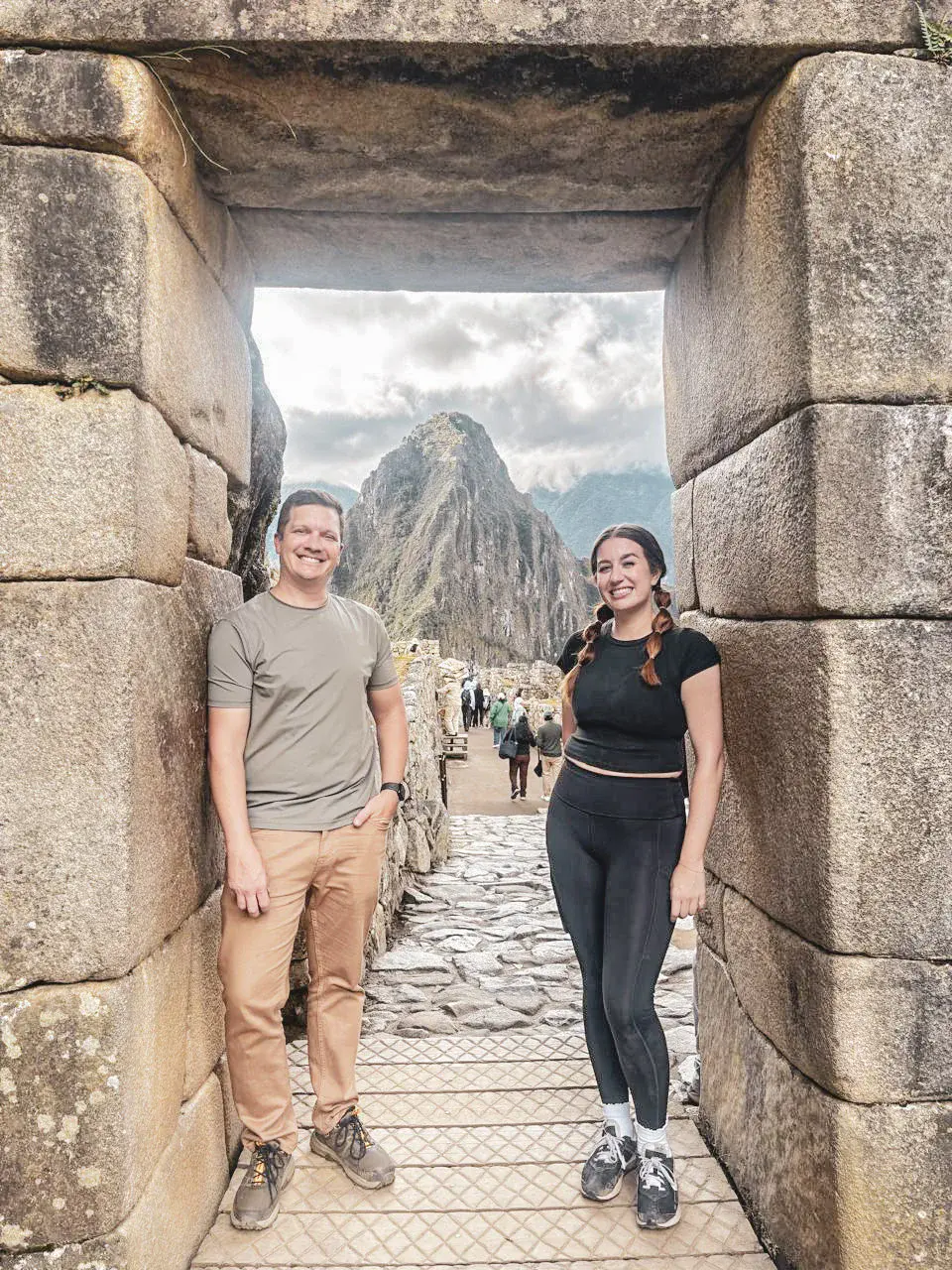
In Quechua, Huayna Picchu (Wayna Pikchu) means “young mountain”, in contrast to Machu Picchu, “old mountain”, the ridge where the citadel stands. The pointed peak behind the ruins is the one in almost every photo of Machu Picchu.
The Incas built terraces, buildings and a stone trail to the top. Archaeologists believe the summit had a religious role, linked to the sun and the surrounding sacred mountains, and that only a small number of people went up.
How hard is it?
The climb is short but steep: about 300 m of height in stone steps, some very narrow, with steel cables to hold in places and steep drops on the sides. Some stretches are so steep that people climb them using their hands. Fit travelers who are comfortable with heights enjoy it; anyone afraid of heights should choose Machu Picchu Mountain instead.
The trail, step by step
- Through the citadel: your visit starts on the Royalty route (3B), through the lower sector of Machu Picchu.
- The checkpoint: next to the Sacred Rock, guards check your ticket and register the time you start. You must sign out at the same point when you come back.
- The climb: a narrow trail of original Inca stairs zigzags up the mountain, with cables at the steepest points. Expect 1–1.5 hours, with stops.
- The terraces: near the top, small Inca terraces and buildings cling to the mountain, with the first big views of the citadel.
- The summit: a cluster of large rocks with a 360° view: Machu Picchu below, the Urubamba River curling around the mountain and the snow peaks in the distance. Allow 20–40 minutes here.
- The descent: down the same way, carefully, in 40–60 minutes. The steps are worn and can be slippery.
How long it takes, minute by minute
| Stage | Approximate time |
|---|---|
| From the main gate to the Huayna Picchu checkpoint (Royalty route) | 30–45 minutes |
| Checkpoint to the terraces near the top | 45–60 minutes |
| Terraces to the summit | 10–20 minutes |
| Time at the summit | 20–40 minutes |
| Descent to the checkpoint | 40–60 minutes |
| Back through the citadel to the exit | 30–45 minutes |
Most people spend 4–5 hours in total, well within the ticket limit (6 hours in 2026, 5 h 30 from 2027). Fit hikers can do the climb in 40 minutes; take your time instead.
What you see
- The classic view of Machu Picchu from the opposite side, looking down on the whole citadel and the zigzag bus road.
- Inca terraces and small buildings near the summit, built on almost vertical slopes.
- The deep canyon of the Urubamba River and the surrounding cloud forest.
The Temple of the Moon (route 3C)
The Temple of the Moon, also called the Great Cavern, is a cave on the back side of Huayna Picchu, lined with fine Inca stonework and carved niches. It is no longer part of the Huayna Picchu ticket: it is a separate route (3C, Great Cavern), with its own ticket, usually available only in high season. The trail is longer and harder, with a long descent and a tough climb back, so plan about 3.5–4 hours.
Tickets and timing
- The Huayna Picchu ticket combines the climb (3A) with the Royalty route of the citadel (3B).
- There are only two entry times (7 am and 10 am in 2026; 6:00 and 8:00 from 2027) and a maximum of 200 people a day. Book as soon as your dates are fixed: 2–4 months ahead from June to October.
- Morning slots often start in mist, which usually lifts by mid-morning.
- The easiest way to fit the climb is a night in Aguas Calientes, as on our Machu Picchu 2-Day Tour or Machu Picchu 3 Days.
- Our private Machu Picchu tour guide can include the Huayna Picchu ticket.
- Prices and ticket rules are explained in our Machu Picchu tickets guide.
How to book the Huayna Picchu ticket, step by step
- Choose your date and slot as soon as your travel dates are fixed: 7 am or 10 am for 2026 visits, 6:00 or 8:00 from January 1, 2027.
- Book route 3A on the Ministry of Culture’s official site, or ask us to book it with your tour. Each ticket is in the traveler’s name, with the passport number.
- Match your train: in 2026, with a 7 am slot sleep in Aguas Calientes or take a very early train; with a 10 am slot a morning train from Ollantaytambo can work. From 2027, a 6:00 entry needs a night in Aguas Calientes; an 8:00 entry is only possible from Ollantaytambo with the earliest train and the bus queue on your side, so a night in Aguas Calientes is the safer plan.
- Bring your passport to the main gate and to the Huayna Picchu checkpoint.
If Huayna Picchu is sold out, Machu Picchu Mountain usually has spaces for longer, and route 3D (Huchuy Picchu) is a short, easier climb with a good view of the citadel.
| Ticket | Foreign adult | Child (3–17) | Andean Community adult |
|---|---|---|---|
| Huayna Picchu (3A + 3B) | S/ 200 | S/ 118 | S/ 112 |
Prices for 2026, set by the Ministry of Culture.
What changes in 2027
New rules apply to visits from January 1, 2027 (RM 407-2026-MC and RM 408-2026-MC); visits until December 31, 2026 keep the current ones.
- Maximum visit time: 5 hours 30 minutes for Huayna Picchu and the citadel together (6 hours until the end of 2026).
- Entry: you enter the citadel at the time on your ticket (the Ministry schedules 6:00 and 8:00 for the mountain routes) and must start the climb at the checkpoint by 10:00.
- Return: you must start down from the summit by 12:00. The average time between entering and leaving the checkpoint is about 3 hours.
- After the climb you have up to 2 hours 30 minutes in the citadel.
Always follow the times printed on your ticket.
Which slot to choose
Visits until December 31, 2026:
- 7 am: cooler, quieter and better for fitting in a train back the same day. The summit is often in the clouds at first.
- 10 am: clearer views on most days, but hotter and busier, and the day finishes later.
Visits from January 1, 2027: you enter the citadel at 6:00 or 8:00 and start the climb by 10:00. The 6:00 entry is the quietest; the 8:00 entry gives the morning mist more time to clear and is easier with a first bus from Aguas Calientes. If you already have your tickets, a private Machu Picchu tour guide can lead your citadel visit before or after the climb.
Safety tips
- Wear hiking shoes or trainers with good grip, never sandals.
- Keep your hands free: use a small daypack and leave poles behind unless they have rubber tips.
- Hold the cables and take the steep stairs slowly, facing the mountain on the way down if needed.
- Give way to people coming up, and do not stop on the narrowest steps for photos.
- Do not climb if it is raining heavily; the stone becomes very slippery.
Who should not climb it
- Anyone with a strong fear of heights or vertigo: some steps have steep drops on one side.
- Children under 12, and travelers with knee or balance problems: the descent is the hardest part.
- Anyone feeling the altitude or very tired after a trek: rest and enjoy the citadel instead.
If you are unsure, Machu Picchu Mountain gives a bigger view on a wider, less exposed trail.
Best time of year to climb
From April to October the stones are dry and the views are clearer, especially from May to September. In the rainy season, from November to March, the summit is often in the clouds and the steps are slippery, but there are fewer people and tickets are easier to get. Read more about the best time to visit Machu Picchu.
Photography tips
- The best photo of the citadel is from the terraces just below the summit, not from the top rocks.
- In the morning mist, wait: the clouds often open for a few minutes at a time.
- Keep your phone on a strap or in a pocket; there is no way to recover something dropped down the slopes.
- Drones and tripods are not allowed inside Machu Picchu.
What to bring
Water in a reusable bottle, sunscreen, a hat, a light rain jacket, your passport and your ticket. Food is not allowed inside Machu Picchu, so eat before you enter.
Huayna Picchu or Machu Picchu Mountain?
| Huayna Picchu | Machu Picchu Mountain | |
|---|---|---|
| Height | 2,720 m | 3,082 m |
| Time up and down | About 2 hours | About 3 hours |
| Trail | Steep, narrow, exposed | Wider, long and steady |
| View | Close-up of the citadel | Wide view of the whole valley |
| Spots | 200 a day | 400 a day |
| Entry times | 7 am or 10 am in 2026; 6:00 or 8:00 from 2027 | 7 am or 9 am in 2026; 6:00 or 8:00 from 2027 |
Tours
Plan this with a local team
Machu Picchu journey
Machu Picchu 2 Days
Spend a night in Aguas Calientes and enter Machu Picchu early. Train, hotel, subject to availability ticket and guide included. Huayna Picchu add-on available.
Full-day train tour
Machu Picchu Day Tour from Cusco
Visit Machu Picchu in one day from Cusco by train, with entry ticket, shuttle bus and a bilingual guide coordinated by a local team.

Inca Trail · permit required
Classic Inca Trail
Hike the Classic Inca Trail to Machu Picchu with a local Cusco operator. Permit, Machu Picchu ticket, porters, meals and Vistadome return included.
Frequently asked questions
Quick answers
Is Huayna Picchu dangerous?
It is safe if you go slowly, hold the cables and do not climb in heavy rain. It is not for anyone with a strong fear of heights.
How long does the Huayna Picchu hike take?
About 2–3 hours up and down: 1–1.5 hours to climb, some time at the summit and 40–60 minutes to come down.
Which entry time is better?
Until December 31, 2026 the slots are 7 am and 10 am: 7 am is cooler and quieter but often starts in mist, 10 am usually has clearer views but is hotter. From January 1, 2027 you enter the citadel at 6:00 or 8:00 and must start the climb by 10:00; the 8:00 entry gives the mist more time to lift. With a night in Aguas Calientes, any slot works.
What changes for Huayna Picchu in 2027?
From January 1, 2027 the visit lasts at most 5 hours 30 minutes, including the citadel. You enter at 6:00 or 8:00 (the time on your ticket), start the climb at the checkpoint by 10:00 and leave the summit by 12:00.
Can I climb Huayna Picchu on a day trip from Cusco?
Sometimes, if the entry times fit the train schedule. A night in Aguas Calientes makes it much easier.
Can I climb it after the Inca Trail?
Yes, with a Huayna Picchu ticket for the morning of your arrival, if your legs still allow it.
How much is the Huayna Picchu ticket?
In 2026, S/ 200 (about US$ 53) for a foreign adult, which includes the Royalty route of the citadel. Children aged 3–17 pay S/ 118, and citizens of the Andean Community pay S/ 112.
What does Huayna Picchu mean?
In Quechua, Wayna Pikchu means "young mountain", in contrast to Machu Picchu, "old mountain", the ridge where the citadel stands.
How many steps does Huayna Picchu have?
Hundreds of original Inca stone steps, many narrow and very steep. Distance is short, about 2 km round trip, but almost all of it is stairs.
Is there an age limit for Huayna Picchu?
We recommend it only for travelers aged 12 and older who are fit and comfortable with heights. Children always need an adult with them.
Is the Temple of the Moon included?
No. The Temple of the Moon is now a separate route (3C, Great Cavern) with its own ticket, usually available in high season.